

Neighbourhood health report
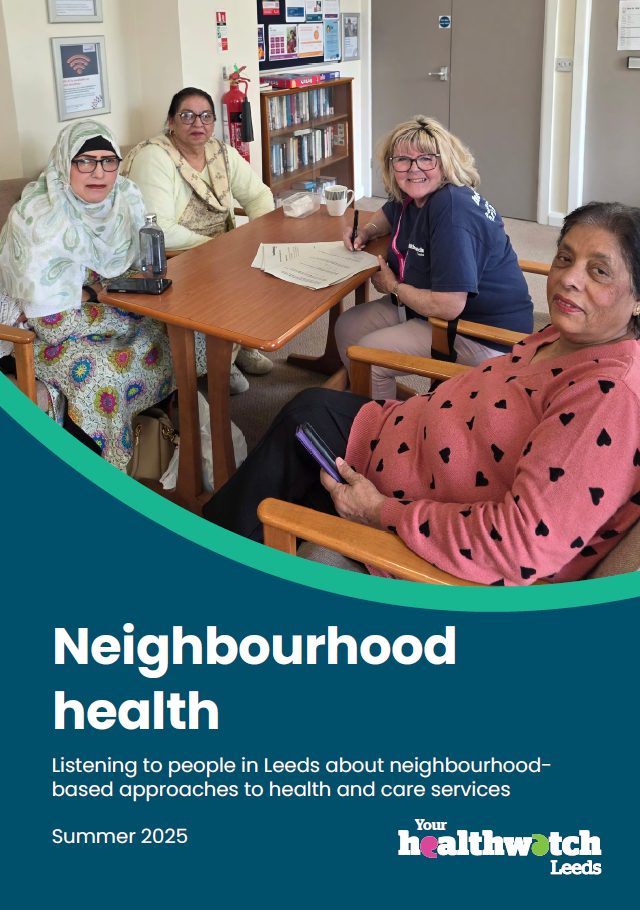
Healthwatch Leeds, in partnership with Leeds Community Healthcare NHS Trust, gathered people’s experiences to inform the city’s neighbourhood health model. Below you will find our report, summary, animation and presentation recording to support learning and action.
We urge system leaders to use these insights to design joined-up, accessible local care shaped by communities to reduce inequalities.
Why people's voices must shape Leeds neighbourhood health model
Autor: Anna Giles
Published: 20 February 2026
Health and care services in Leeds are changing. Like the rest of the country, our city is moving towards a neighbourhood health model that aims to bring services closer to where people live, improve prevention and join up support across health, social care and the voluntary sector.
This approach is a key part of the government’s 10-year NHS plan, and it has the potential to make care more personalised, accessible and joined-up. Before this change, it must be shaped by people who use services.
Over the summer of 2025, we listened to people across Leeds about their experiences of accessing health and care locally. We spoke to communities, young people, parents and carers, unpaid carers and the voluntary sector.
A neighbourhood model is not just a structural change. It represents a different way of working with people and communities. If people are not involved, services risk being designed around organisational boundaries rather than real lives, inequalities could widen instead of being reduced, and trust in local services could be damaged. Our work helps leaders understand how services are experienced on the ground and where change will have the greatest impact.
Highlights
People with disabilities reported that they perceived their health condition as their biggest barrier to self-care, particularly for those living in poverty.
People were more likely to use a high number of services each year if they were aged 56 or older, had difficulties getting out of the house, had a mental health condition or neurodivergent or received state benefits.
Most of our respondents were not users of community spaces but were open to the idea of having appointments in public spaces as long as there was guaranteed privacy. Those who struggled to leave the house, black respondents, and those living in poverty were hesitant about this.
Many people are motivated to use digital support but it is important to get this right and consider other options for those who cannot access support digitally or choose not to.
Many people who look after their relatives or friends (unpaid carers) see the benefits of more community-based support, especially if it is easy to get to and inclusive of additional access needs.
Children and young people and their parents or carers reported not always feeling truly listened to by health professionals and struggle to manage multiple accounts when accessing online services. They would benefit from more information and guidance to help with mental health and wellbeing, especially as young people reported more motivation to change their lifestyles in order to improve their health and wellbeing.
Resources to support learning and action
Alongside the full report, we have developed a range of resources to make the findings accessible to different audiences and understandable by the system.
These resources aim to ensure that people, communities and professionals can all understand the findings and use them to inform the development of neighbourhood working.
Making Neighbourhood Health Services Work for People in Leeds - Summary
A summary report provides a brief overview of why we did the report and our findings in clear, plain language.
Animation
A voiced over animation explains the work and the proposed actions from Leeds Community Healthcare NHS Trust in a way that is easy to understand and share with communities.
Making neighbourhood health services work for people in Leeds: recorded presentation
A recorded presentation on making neighbourhood health services work for people in Leeds is intended for use in meetings and discussions with health and care professionals to support reflection, planning, and implementation.